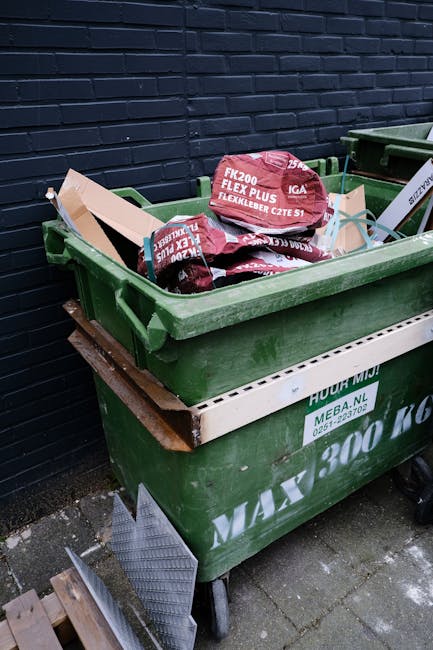
NW9 Garden Rubbish Clearance and Skip Alternatives: A Practical Guide for Real Homes and Real Gardens
If your garden in NW9 has turned into a half-term project, a weekend headache, or just a corner full of soggy hedge cuttings and broken planters, you are not alone. Garden waste builds up fast: one pruning session becomes two builder's bags, then suddenly there's a pile of soil, branches, old fencing, and that awkward bit of decking you swore you'd deal with last spring. This guide on NW9 garden rubbish clearance and skip alternatives explains the options clearly, so you can choose the simplest, cleanest, and most sensible way to get the job done.
We'll look at how garden clearance works, when a skip actually makes sense, when it doesn't, and what alternatives can save time, hassle, and driveway drama. You'll also find practical steps, a comparison table, common mistakes, and a simple checklist you can use before you book anything.
Table of Contents
- Why NW9 garden rubbish clearance and skip alternatives Matters
- How NW9 garden rubbish clearance and skip alternatives Works
- Key Benefits and Practical Advantages
- Who This Is For and When It Makes Sense
- Step-by-Step Guidance
- Expert Tips for Better Results
- Common Mistakes to Avoid
- Tools, Resources and Recommendations
- Law, Compliance, Standards, or Best Practice
- Options, Methods, or Comparison Table
- Case Study or Real-World Example
- Practical Checklist
- Conclusion
- Frequently Asked Questions
Why NW9 garden rubbish clearance and skip alternatives Matters
Garden waste is one of those jobs that looks small until you start lifting it. A few branches, some turf, a broken shed panel, a line of dead shrubs, maybe an old sack of compost that's gone hard as brick. It piles up quickly, especially if you've been waiting for better weather or trying to keep costs down by doing it yourself.
In NW9, space can be tight. Front drives may be shared, some homes have limited access, and parking can be more complicated than you want it to be on a Saturday morning. That is where skip alternatives become genuinely useful. You may not need a large skip sitting outside for days if the waste can be collected, loaded, and removed in one visit.
This matters for more than convenience. Garden rubbish can become a nuisance if left too long. Wet green waste attracts flies and smells. Timber starts to rot. Soil bags split. And let's face it, once a job starts looking messy, it becomes harder to motivate yourself to finish it. A clear plan helps you avoid that awkward half-cleared garden feeling where everything looks worse before it looks better.
It also matters because not all waste is the same. Green waste, soil, wood, metal, garden furniture, and occasional household items all need to be handled sensibly. A good clearance approach separates what can be reused or recycled from what needs disposal, and that is a much better outcome than just throwing everything into a skip and hoping for the best.
Expert summary: the best solution is rarely the biggest one. For many NW9 households, a targeted clearance service or a skip alternative is faster, tidier, and better suited to narrow access, mixed waste, and one-off garden jobs.
How NW9 garden rubbish clearance and skip alternatives Works
At a practical level, garden rubbish clearance is simple: waste is assessed, separated where needed, lifted, and taken away. The difference between a standard skip and a skip alternative is in how the job is handled.
A skip usually means:
- you choose the size
- it gets delivered and placed on the property or road, subject to access and permissions
- you fill it yourself
- it stays there until collection
A skip alternative usually means:
- the waste is collected directly from your property
- a team loads the material for you
- the vehicle leaves once the job is complete
- you do not have a skip taking up space for days
That distinction sounds minor, but in real life it changes everything. If your garden waste is stacked at the rear of a terraced property or at the bottom of a long shared path, having someone do the lifting can save a lot of time and backache. If you only have a modest amount of waste, a skip can feel like using a wheelbarrow to move a teacup. Slightly overkill, to be fair.
Most garden clearance jobs begin with a rough estimate of volume and access. Are there branches that need cutting down first? Is there heavy soil or hardcore mixed in? Do you have old fencing, sleepers, or patio rubble? The answers shape the best method.
If you are also dealing with other unwanted items around the property, it can make sense to look at related services such as garage clearance or broader waste removal support, especially when the garden job has spilled into the shed, side return, or driveway.
Key Benefits and Practical Advantages
There are good reasons people search for skip alternatives rather than assuming a skip is the default choice. Here are the main advantages, in plain English.
- Less hassle: you do not have to fill a skip yourself over several days.
- Better for awkward access: narrow drives, back gardens, steps, and shared entrances are easier to manage with a loading team.
- Faster turnaround: the waste can often be cleared in one visit instead of waiting for collection later.
- Cleaner appearance: you avoid a large metal container sitting outside your home.
- More flexible: mixed loads, bulky garden items, and green waste can often be handled together.
- Potentially more efficient: if your waste is modest or concentrated, paying for a full skip may not be necessary.
There is also a practical emotional benefit that people do not always mention. Once a clearance team starts removing the mess, the garden begins to feel usable again. You can see the corners, the borders, the lawn edge, the path. It sounds small, but it changes how you feel about the space.
For properties that need a bit more than garden work alone, the same approach can pair well with home clearance or house clearance when the old furniture, bags, or household clutter has crept into the garden area.
Who This Is For and When It Makes Sense
This topic is useful for a wide range of people, not just keen gardeners. In our experience, the people who benefit most are usually dealing with one of a few common scenarios.
- Homeowners doing seasonal tidying: hedge cuttings, lawn waste, leaves, and pruned branches after a big sort-out.
- Landlords and managing agents: end-of-tenancy gardens that need to be cleared quickly before new tenants move in.
- Older residents or busy families: people who can manage the planning but not the heavy lifting.
- People with limited access: terrace gardens, basement access, shared alleys, or narrow side paths.
- Anyone with mixed garden waste: where the pile includes green waste, timber, broken pots, and a bit of old outdoor furniture.
It also makes sense when the volume is enough to be annoying but not enough to justify a full skip. That middle ground is where skip alternatives shine. You might only have one or two loads of waste, but they are bulky, dirty, and awkward to move. A small job can still be a proper job.
If the clearance is connected to other household items, you may also want to review furniture disposal or furniture clearance if old chairs, benches, or storage pieces are coming out of the garden too.
Step-by-Step Guidance
Here is a simple way to approach garden clearance without overcomplicating things.
- Walk the garden slowly. Make one pass and note everything that needs to go. Look in corners, behind sheds, along fences, and under tarps. That is where the forgotten bits hide.
- Separate waste by type. Green waste, soil, wood, metal, plastics, and general rubbish should be identified early. It helps with planning and disposal.
- Check for awkward items. Large branches, broken panels, old planters, compost bags, and heavy paving offcuts may need extra handling.
- Measure access points. Gates, side passages, steps, and parking access all matter. A quick look now can avoid a messy surprise later.
- Decide whether a skip or collection suits the job. If the waste is easy to carry and you have room for a skip, that may work. If access is poor or you want the garden cleared in one go, a skip alternative may be better.
- Book the right service. Match the service to the waste. For example, a mixed garden and household clear-out is different from a pure green-waste load.
- Prepare the site. Move pets, unlock gates, clear a path, and set aside anything you want to keep.
- Confirm what is included. Ask whether labour, loading, sweeping, and recycling are covered so there are no awkward assumptions on the day.
A useful habit is to pile everything in one area if possible. Not neatly, necessarily. Just together. It makes collection much smoother, especially if the team has to work around flower beds or tight paving.
If you are sorting a property that has multiple storage areas, loft clearance can be helpful when the same clean-out project spreads beyond the garden and into hidden spaces. That happens more often than people expect.
Expert Tips for Better Results
A few small decisions can make the whole process smoother. These are the kinds of details that save time on the day.
- Group waste by weight as well as type. Keep soil, rubble, and heavy timber separate from lighter green waste where you can.
- Cut oversized branches down first. A saw or loppers can reduce volume a lot. Just work safely and don't rush it.
- Keep reusable items out of the waste pile. Old pots, decent timber, and usable outdoor storage might be worth keeping or passing on.
- Be realistic about wet waste. Rain makes green waste heavier. If it has been tipping down all morning, volume estimates can be misleading.
- Think about the route out. A clear walkway from the garden to the vehicle saves time and avoids damage to fences or flower borders.
- Choose timing with care. Early starts help in busy streets and avoid the afternoon "where did the day go?" feeling.
One small but useful tip: if you are unsure whether your pile is mainly green waste or a mixed load, take a quick photo from a few angles. Even a rough image can help when discussing the job. No need for perfection; a picture on a damp Tuesday morning tells more than a long explanation sometimes.
If recycling and responsible disposal matter to you, it is worth looking at a provider's approach to recycling and sustainability. Good clearance work should not just make the garden tidy; it should also aim to keep recyclable material out of general disposal wherever practical.
Common Mistakes to Avoid
People often think the main mistake is picking the wrong service. That can happen, yes. But the smaller mistakes are usually what create the headache.
- Underestimating the amount of waste. A hedge cut can look tiny in the border and huge once it is all bagged.
- Ignoring access issues. If the back gate is narrow or the driveway is blocked, delivery and loading become harder.
- Mixing waste without checking rules. Some items need separate handling, especially anything that could contaminate green waste.
- Leaving heavy items until last. Soil and rubble are the least fun to move, and they usually take the most time.
- Booking the wrong size solution. Too small and you need a second round; too large and you may pay for unused capacity.
- Forgetting about nearby surfaces. Fresh decking, paving, and turf can be marked if waste is dragged across them carelessly.
There is also the classic one: starting the clear-out the day before a booked collection and then discovering three more bags of stuff. It happens. More than once, probably. That's why a calm, staged approach is best.
Tools, Resources and Recommendations
You do not need a van full of equipment to manage garden waste well, but a few practical tools help a lot.
- Heavy-duty gloves: useful for thorny branches, rough timber, and damp waste.
- Loppers or a pruning saw: good for reducing bulk before collection.
- Rake and shovel: helpful for leaves, soil, and smaller debris.
- Builder's bags or rubble sacks: useful for sorting loose material and keeping the area tidy.
- Wheelbarrow: still one of the most underrated bits of kit, really.
- Tarpaulin: good for keeping waste together and protecting paving.
From a service perspective, look for clear pricing, straightforward communication, and an obvious commitment to safe handling. If the job involves more than garden waste, the service may overlap with general waste removal or even builders waste clearance if there are paving offcuts, timber frames, or demolition debris mixed in.
You may also find it helpful to review pricing and quotes before booking, especially if you want to compare your options in a sensible, low-pressure way.
Law, Compliance, Standards, or Best Practice
Garden rubbish clearance in the UK should be handled responsibly, even when it seems like a straightforward domestic job. You do not need to become a waste law expert, but a few basic principles matter.
First, waste should be carried and disposed of by a suitable provider who handles it properly. If someone takes waste away cheaply but cannot explain where it goes, that is not a good sign. Household and garden waste should be processed with care, and mixed loads need proper sorting where practical.
Second, avoid leaving waste in a way that creates a nuisance for neighbours or blocks shared access. That is especially important in denser parts of NW9, where space is already limited and a pile of branches on the kerb can become everybody's problem very quickly.
Third, safety matters. Broken glass, rusted metal, hidden nails, slippery moss, and unstable stacks are all common garden risks. A good provider should have a proper approach to handling, loading, and vehicle safety. You can usually gauge this from how clearly they explain their process and whether they mention health and safety and insurance and safety.
If you are a business rather than a homeowner, or you are dealing with outdoor waste generated by a commercial property, business waste removal may be a more suitable fit than a domestic service. The right classification matters, even when the waste looks similar on the surface.
One more sensible note: keep your own records, especially if the clearance is part of a larger job or property handover. Clear communication prevents messy misunderstandings later.
Options, Methods, or Comparison Table
Choosing between a skip and a skip alternative is usually about access, effort, volume, and timing. Here is a practical comparison.
| Option | Best for | Advantages | Limitations |
|---|---|---|---|
| Traditional skip | Large, straightforward loads with good access | Useful for DIY work over several days; works well when space is available | Can take up drive or road space; may require permits or careful placement; you load it yourself |
| Man-and-van style clearance | Mixed garden waste, awkward access, smaller or medium loads | Fast, labour included, less disruption, often simpler for one-off jobs | May be less ideal for very large ongoing projects |
| Heavy-duty bag or staged collection | Gradual clear-outs and lighter waste volumes | Flexible and tidy; good if you are sorting over time | Can become inconvenient if the waste pile grows quickly |
| Self-loading trailer or transport | People with a vehicle and the muscle to do it themselves | Can be economical for confident DIYers | Time-consuming, physically demanding, and less convenient for bulky loads |
So which is best? If the garden is easy to access, the waste is uniform, and you do not mind loading yourself, a skip can work well. If the garden is tucked away, the load is mixed, or you would rather not spend the afternoon hauling damp branches past the bins, a skip alternative is often the smarter choice.
Case Study or Real-World Example
Imagine a typical NW9 back garden after a spring tidy-up. There is a stack of hedge cuttings near the fence, a few old terracotta pots with cracked rims, a broken wooden bench, some soil from a raised bed, and a couple of bags of leaves that have gone flat after a wet week. Nothing dramatic. Just enough to feel untidy every time you look out the kitchen window.
The homeowner first considers a skip. But the access is tight, the driveway is shared, and the garden gate is narrow. A skip would sit awkwardly out front and create extra hassle with neighbours and parking. Instead, they choose a direct clearance approach. The waste is grouped into one accessible corner, the bulky timber is cut down, and the rest is loaded in one visit. The garden is left clear, and the path can be used again without stepping around piles of green waste.
That sort of outcome is common. The job is not always huge. It is just inconvenient. And convenience matters when you are trying to get your weekend back.
In a similar mixed-outbuildings scenario, a combined approach with garage clearance or flat clearance can make sense if the tidy-up spills into indoor storage or shared areas as well.
Practical Checklist
Use this checklist before you book or start loading anything.
- Have I identified everything that needs removing?
- Is the waste mostly green waste, or is it mixed?
- Are there heavy items such as soil, rubble, or old timber?
- Can a vehicle or team access the waste easily?
- Do I want to load everything myself, or would help be better?
- Is there space for a skip, and if so, is that the most practical choice?
- Have I set aside anything I want to keep or reuse?
- Are pets, children, and neighbours' access safely managed?
- Do I understand what happens to the waste after collection?
- Have I checked the provider's terms, payment process, and service details?
If the answer to several of those is "not quite yet," that is fine. Better to sort it calmly than rush into the wrong option.
For anyone wanting a little more background on the company side of things, the about us page can help you understand the approach behind the service, and the contact us page is the sensible next step if you want to talk through a specific job.
Conclusion
NW9 garden rubbish clearance and skip alternatives are really about choosing the right tool for the job. A skip is not always wrong, but it is not always the best fit either. If your garden has awkward access, mixed waste, or you simply want the mess gone without living beside a metal box for a week, a skip alternative can be the cleaner, easier route.
The best choice is the one that matches your space, your timeline, and your energy. That may sound obvious, but in real life people often default to whatever feels familiar. A little planning goes a long way here. Clear the access, sort the waste, and choose the method that saves you the most effort without cutting corners.
Get a free quote today and see how much you can save.
And if you are still deciding, take a moment, step into the garden, and look at the job as it is, not as you hope it might be after one heroic afternoon. That usually gives the clearest answer. Funny how often that works.
Frequently Asked Questions
What counts as garden rubbish in NW9?
Garden rubbish usually includes grass cuttings, hedge trimmings, branches, leaves, soil, turf, old plant pots, broken fencing, damaged garden furniture, and similar outdoor waste. Mixed loads are common, especially after a full tidy-up.
Is a skip always the cheapest option?
Not necessarily. A skip can be cost-effective for larger, simple loads, but it may be poor value for smaller jobs, awkward access, or mixed waste. If you only have a moderate pile, a skip alternative can sometimes work out better.
When is a skip alternative better than a skip?
A skip alternative is often better when access is tight, the waste is awkward to carry, you want the area cleared quickly, or you do not want a skip taking up space outside your home.
Can garden waste and household rubbish be collected together?
Often yes, but it depends on the service and the type of material. Mixed loads need sensible sorting. It is best to explain exactly what you have so the provider can advise on the most suitable approach.
Do I need to prepare the garden before collection?
Some preparation helps a lot. Move anything you want to keep, clear a route to the waste, and separate heavy items if you can. Even a small bit of prep can save time on the day.
What happens to the waste after it is collected?
That depends on the material and the provider's process. Green waste, wood, metal, and reusable items may be sorted separately. A responsible provider should be able to explain how they handle recycling and disposal in general terms.
Can I put soil in a skip?
Usually yes, but soil is heavy and it can affect what size solution makes sense. A big pile of soil can be more cumbersome than it first looks, so it is worth mentioning it early when requesting a quote.
How do I know if my garden job is too small for a skip?
If the waste would only fill part of a skip, or if you are mainly dealing with a few bulky items and some green cuttings, a skip may be more than you need. Ask yourself whether the space and loading effort are actually worth it.
What should I ask before booking garden clearance?
Ask what is included, how the waste is handled, whether heavy items are accepted, how access affects the job, and whether the quote covers loading and removal. Clear answers now prevent stress later.
Is it safe to leave garden waste outside overnight?
Usually it is better not to leave waste out for too long, especially if it is wet or loose. It can become messy, attract pests, or create a trip hazard. If possible, keep it contained and arranged for prompt collection.
Can old fencing or broken sheds be taken away too?
Yes, in many cases timber, fencing, and shed materials can be included, especially if they are part of a garden clear-out. If the material is mixed with other waste, mention it in advance so the right method can be chosen.
How do I choose the best option in NW9?
Start with access, volume, and how much effort you want to spend loading waste yourself. If the job is straightforward and space is available, a skip can work. If the garden is tight or the load is mixed, a skip alternative is often more practical.